The Great Inversion: How Progressivism Learned to Lie Using Kind Words
How We Ended Up Afraid of Ordinary Conversation

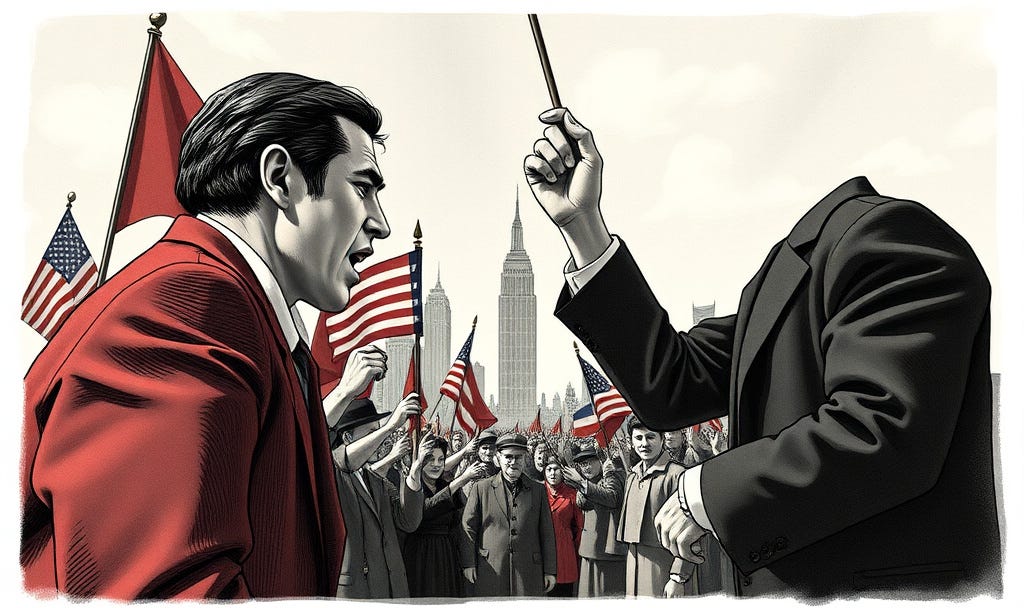
There’s a peculiar feeling many people now have when opening their mouths in public. It’s the same sensation you get when reversing a car with a tow-bar attached and you think there might be a wall behind you, but you’re not quite sure. So you speak slowly. You hedge. You pre-apologise. You add unnecessary cushions like “just my opinion” and “I could be wrong here” even when you’re stating something as controversial as “two plus two is four”.
This, we’re told, is progress.
Apparently, society has become kinder, fairer, and more inclusive. Which is odd, because everyone seems angrier, more suspicious, and permanently one poorly phrased sentence away from social execution. Families argue about things they never argued about before. Colleagues watch one another like suspicious meerkats. Ordinary conversation now comes with the ambient tension of a hostage negotiation.
The reason for this isn’t that people have suddenly become wicked. It’s that language has been tampered with. And once language goes, meaning follows shortly after, waving apologetically as it exits the building.
Progressivism’s great trick is not persuasion. It’s inversion. Take perfectly good words and quietly swap their contents while nobody’s looking. Equality becomes “equity”, which sounds similar but now means enforced outcomes rather than equal rules. Justice becomes “social justice”, which is justice with a pre-approved list of villains. Safety stops meaning protection from physical harm and starts meaning protection from emotional discomfort, provided the discomfort belongs to the correct demographic.
Once this is done, debate becomes impossible, because you and the other person are no longer speaking the same language. You think you’re discussing fairness. They think you’re confessing guilt.
Next comes the hierarchy. Progressivism insists it hates hierarchies, which is impressive given how enthusiastically it builds one. At the top sit the most protected identities, wrapped in moral bubble-wrap. At the bottom sit the designated oppressors, who are assumed guilty before speaking and expected to apologise even when silent. Behaviour matters less than category. Evidence is optional. Intent is a luxury.
This is why the same action can be treated as either an unforgivable outrage or a tragic misunderstanding depending entirely on who committed it. Insults are either violence or “punching up”. Crime is either wickedness or context. Responsibility is either absolute or mysteriously absent. This isn’t compassion. It’s moral accounting with a thumb firmly on the scales.
Progressivism claims, loudly and often, that it exists to protect minorities. This sounds noble, and most people nod along because objecting feels rude. But the moment you calmly test the logic, things get awkward very quickly. If minorities deserve special protection as a principle, that principle must apply universally. Globally. Everywhere. And globally — awkward pause — white people are a minority, and a shrinking one at that. At this point the principle quietly packs its bags and leaves through a side door, replaced by a series of frantic qualifiers involving history, power, context, vibes, and a sudden need to be somewhere else.
Which tells you everything you need to know. This was never a principle. It was a slogan.
And this is where the real damage happens. Because once morality becomes selective, victims themselves become negotiable. If a victim supports the approved narrative, they are amplified and sanctified. If they disrupt it — if acknowledging their suffering would reflect badly on a protected group — they are minimised, ignored, or quietly blamed. Their pain becomes “complex”. Their story becomes inconvenient. Justice is politely asked to wait outside.
All of this is enforced not with arguments, but with emotional blackmail. Questioning is reframed as harm. Disagreement becomes violence. Silence becomes complicity. Discomfort becomes proof. The goal is not to convince you — it’s to make thinking itself feel morally risky. And because most people are decent, they comply. Not because they agree, but because they don’t want to hurt anyone.
The cruel irony is that this ideology claims to reduce division while actively manufacturing it. People are encouraged to see one another not as individuals, friends, colleagues, or family members, but as avatars of historical forces. Siblings are subtly invited to view each other through racial or ideological lenses that never existed before. Trust is replaced with suspicion. Gratitude with grievance. Harmony with permanent moral audit. This is sold as “awareness”. What it actually produces is social frost.
The antidote to all of this is not another ideology. It’s something far more boring, and therefore far more effective: universal standards. Same rules for everyone. Same law. Same compassion. Same consequences. Individuals judged by what they do, not what box they’re put in. Victims defended because they are victims, not because they help someone win an argument. Language used to describe reality, not remodel it to suit power.
This isn’t radical. It isn’t extreme. It’s the moral baseline that allowed plural societies to function before Progressivism decided it knew better. And the reason this system reacts so aggressively to calm scrutiny is simple: once you turn the lights on, the magic trick stops working.
And nobody likes being exposed mid-rabbit.
One of your best pieces of writing yet. A wonderful way with words and phrases. You’ve absolutely nailed the social dilemma we face.
“Individuals judged by what they do, not what box they’re put in.”
Ah, you’ve hit upon Progressivism/Marxism/Same Thing’s kryptonite, Guy, and that’s “Meritocracy”.
And there are simply no victims to be had in that…..